
Clearview Blog What Are Hard Water Stains on Long Island Windows?
What Are Hard Water Stains on Long Island Windows?
Short answer. Those cloudy white spots are minerals left behind when sprinkler or runoff water dries on the glass. A wipe or ordinary glass cleaner does not lift them, because the minerals have stuck to the pane instead of sitting on it as loose dirt. Clearview lists hard-water stain removal with window cleaning, and exterior window washing treats mineral staining from sprinklers and runoff. The detail below is general guidance.
What are the white spots on the glass?
If the lower windows look speckled after the lawn has been watered, you are usually looking at hard water, not dust. Irrigation water carries dissolved minerals, most often calcium and magnesium. Some water also carries a little iron, which can dry to a faint tan edge instead of pure white. While the droplet is wet you barely see them. Once the sun dries the pane, the water is gone and the minerals stay.
The pattern tells you the source. Dots or a repeating arc on a first-floor window usually mean a sprinkler head is hitting that pane on a timer. A cloudy band under a drip edge, or beside a downspout that splashes the wall, is runoff. Upper windows that never get spray usually stay free of this stain. Pollen lands more evenly and, in spring, looks yellow rather than chalky white.
Salt air is a different layer: an even haze on houses near the bay or the ocean, not a sprinkler arc. How that fits a Long Island schedule is in the guide on how often to clean windows.
Why will a wipe not lift them?
A dry cloth or a spray of household glass cleaner is made for loose dirt and fingerprints. Hard-water spots are not loose. As the droplet dries, the minerals concentrate and bond to the glass. Wiping smears the dust around the spot and leaves the white mark. Pressing harder does not dissolve it. Abrasive pads and powdered cleaners can scratch the pane and still leave the stain.
Rain rinses fresh dust. It does not dissolve a deposit that has already dried, and a hose of the same water can add another layer once the sun returns. A droplet wiped while it is still wet comes off. Left through a hot afternoon on a south- or west-facing pane, it bakes in place, which is why the sunny side often looks worse. This is general guidance about how the spots set.
Which windows on a Long Island house get them?
First-floor glass in the spray path is the usual place, on houses across Nassau and Suffolk County. A head set too high, a rotor that overshoots the bed, or a hose bib that weeps onto a sill marks the same panes every cycle, so the spots stack through the summer.
Glass under a gutter that overflows picks up similar stains. If water sheets over the trough in a moderate rain, the gutter needs attention. Clearing it does not take minerals off the glass. Screens add another pass: dust in the mesh drops onto the pane the first time the sash opens. Screen cleaning is a hand wash of the mesh and frame, then a re-fit, and it can be added to a window visit.
Interior glass rarely shows this staining unless someone has sprayed the inside. Cooking film is a different coat, handled when interior washing is part of the visit.
What does a window visit do with the spots?
Window cleaning covers interior and exterior glass for homes and businesses, and hard-water stain removal is listed with that service. The published order of work is to inspect the windows, screens, and tracks and note hard-water spots, pre-treat mineral deposits so they lift, wash with purified water and a squeegee, then wipe frames and sills and walk the job with you. Purified water matters because a rinse of untreated tap water can dry into a new mineral film.
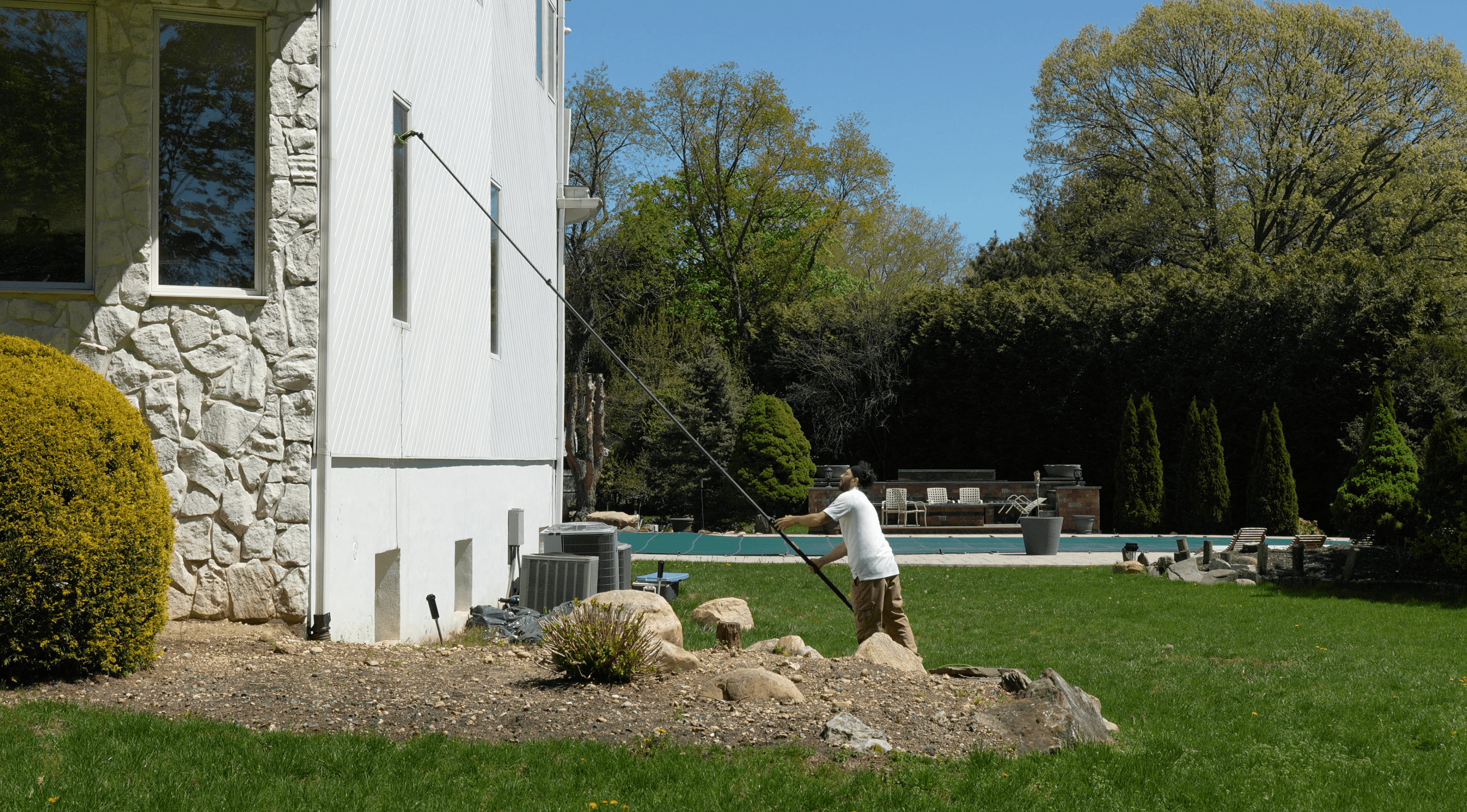
Exterior window washing is the booking when the curb view is the problem and the rooms still look fine. The service states that the crew treats and removes mineral staining from sprinklers and runoff that ordinary cleaning leaves behind. It includes all exterior glass, a wipe of frames and sills, and hard-water treatment where it is needed. Upper floors are reached with water-fed poles.
Membership plans on the window-cleaning page list hard-water removal as included. Bi-annual service is full price per clean, quarterly is $100 off per clean, and monthly is $150 off per clean. Each plan also lists a Clearview rain coat and a 7-day rain guarantee. Most Long Island homeowners book two to four times a year. Sprinkler spots are one reason some lower panes need the more frequent end of that range, not a reason to put every house on a monthly visit.
The site does not publish a flat price for stain removal on its own. A quote is based on the property. When you request a quote, say which sides the sprinklers hit so those panes are treated, not only squeegeed. Clearview states that the crew is fully insured and that the work is backed by a 100% satisfaction guarantee.
What will a wash not clear?
If the haze sits between the two panes of a double-glazed unit, the seal has failed. Washing either face will not clear moisture trapped inside the glass. Point those units out so the visit is spent on panes a wash can change.
A spot from last week and a mark that has baked on all summer are not the same amount of work. The published step is still to treat the deposits so they lift, then wash. A failed pass with household spray does not mean the mark has to stay. Washing the siding is a separate job: higher pressure is for hardscapes such as concrete, and a soft wash is for surfaces that should not take that pressure. Neither one removes mineral spots from window glass. Green on the wall beside the window is covered in the pressure washing and soft washing guide.
How do you slow the next round of spots?
Aim the heads so the spray stops short of the glass. If a cycle does wet the window, wiping or rinsing it the same day, before the sun bakes the droplet, keeps a fresh spot from setting. That will not lift spots that have already bonded. It is general homeowner guidance, not a published cleaning step.
Once the white marks are easy to see from the yard, more weeks on the same timer add another layer. Book the exterior wash, and mention the screens if the mesh looks dusty. Call (516) 212-0760 or request a quote. Give the town, and say which sides are spotted.
Questions homeowners ask
What are hard water stains on windows?
They are minerals left on the glass after sprinkler or runoff water dries. The water evaporates and the minerals stay behind as cloudy spots or a white haze, usually on lower exterior panes.
Why will a wipe not remove hard water stains?
A wipe or ordinary glass cleaner is made for dust and fingerprints. Dried minerals have bonded to the pane, so the cloth smears the dirt around the spot and leaves the stain. The spots need a treatment step before the glass is washed.
Does window cleaning include hard water stain removal?
Clearview lists hard water stain removal with window cleaning. Exterior window washing includes treatment for mineral staining from sprinklers and runoff where it is needed. Membership plans list free hard water removal. The price is quoted for your property. The site does not publish a flat rate for stain removal.
Keep reading
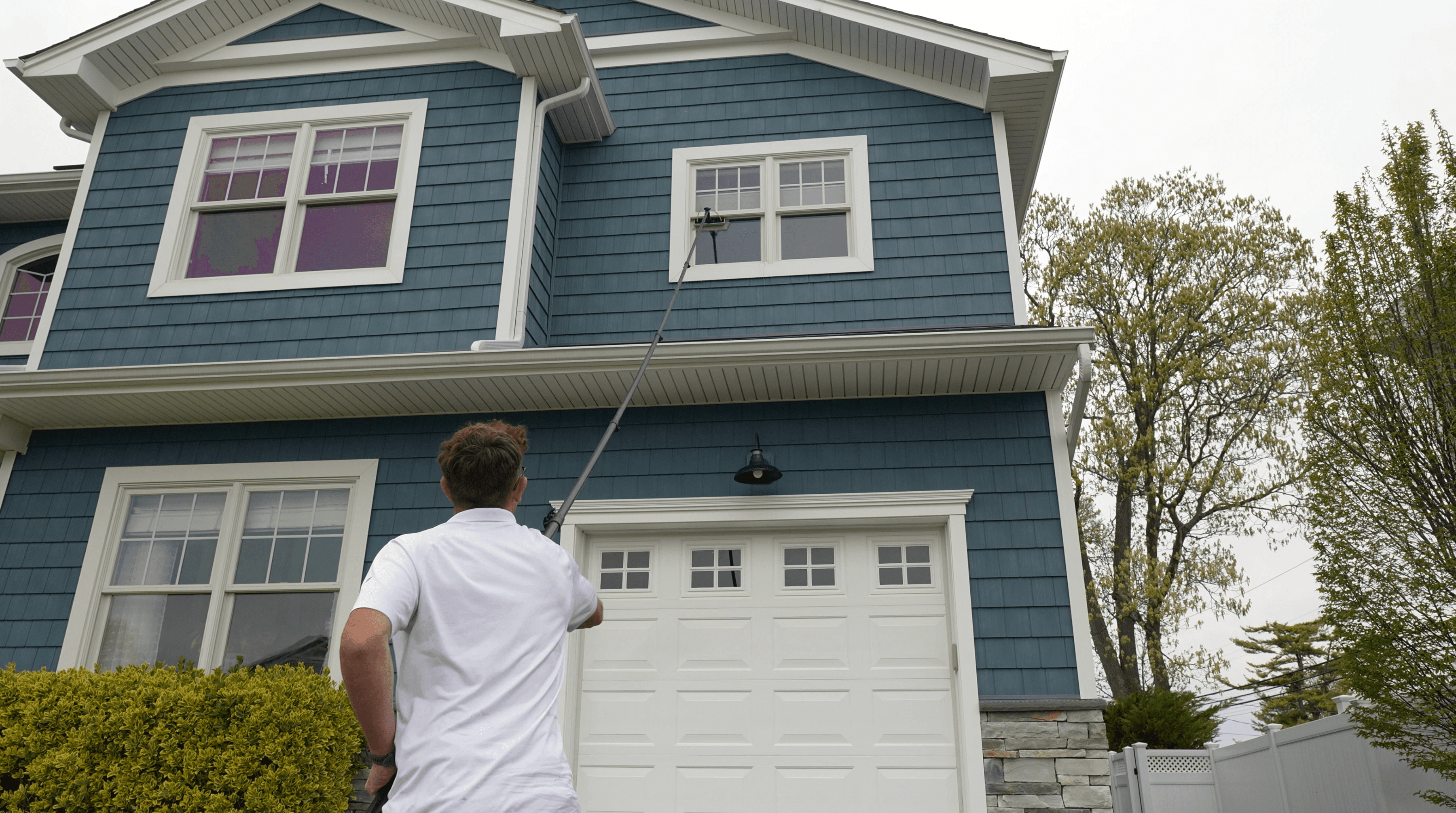
How Often Should You Clean Windows on Long Island?
How salt air, pollen, and sprinklers change the schedule, and what a thorough window visit should include.
Read more →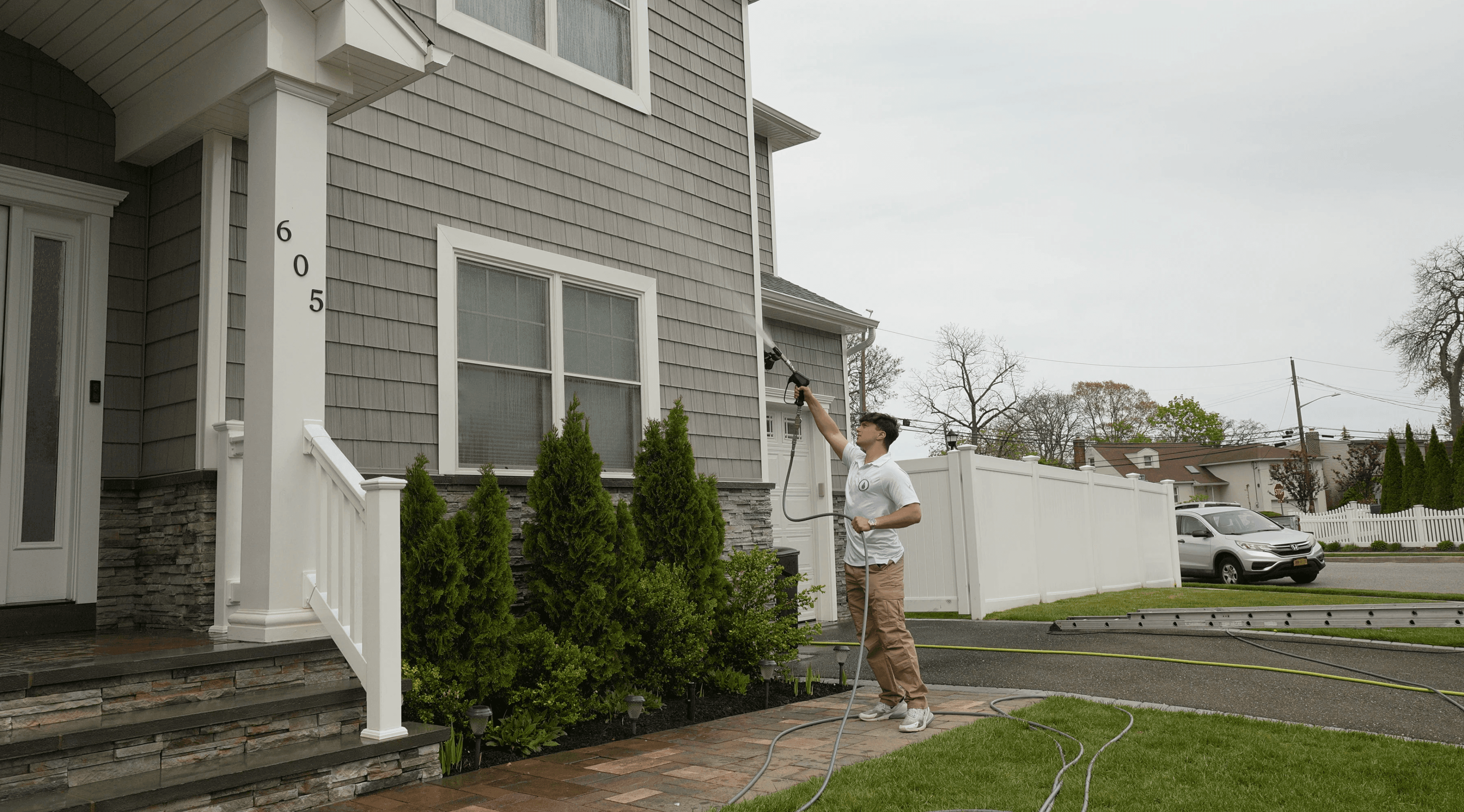
Pressure Washing vs Soft Washing for Long Island Homes
Which surfaces want a soft wash, which can take higher pressure, and what to ask before a crew starts on the house.
Read more →Clearview Window Cleaning
Get a free quote
Call (516) 212-0760 or tell us about the property. We schedule window cleaning for homes and businesses across Nassau and Suffolk County.