
Clearview Blog Pressure Washing vs Soft Washing for Long Island Homes
Pressure Washing vs Soft Washing for Long Island Homes
Short answer. Use higher pressure on hard surfaces such as concrete driveways, walkways, and patios. Use a soft wash — lower pressure, a cleaning solution that sits on the surface, then a gentle rinse — on siding, painted wood, and other finishes that can be forced apart by a tight jet. Matching the method to the material is the whole decision. The machine is not the method.
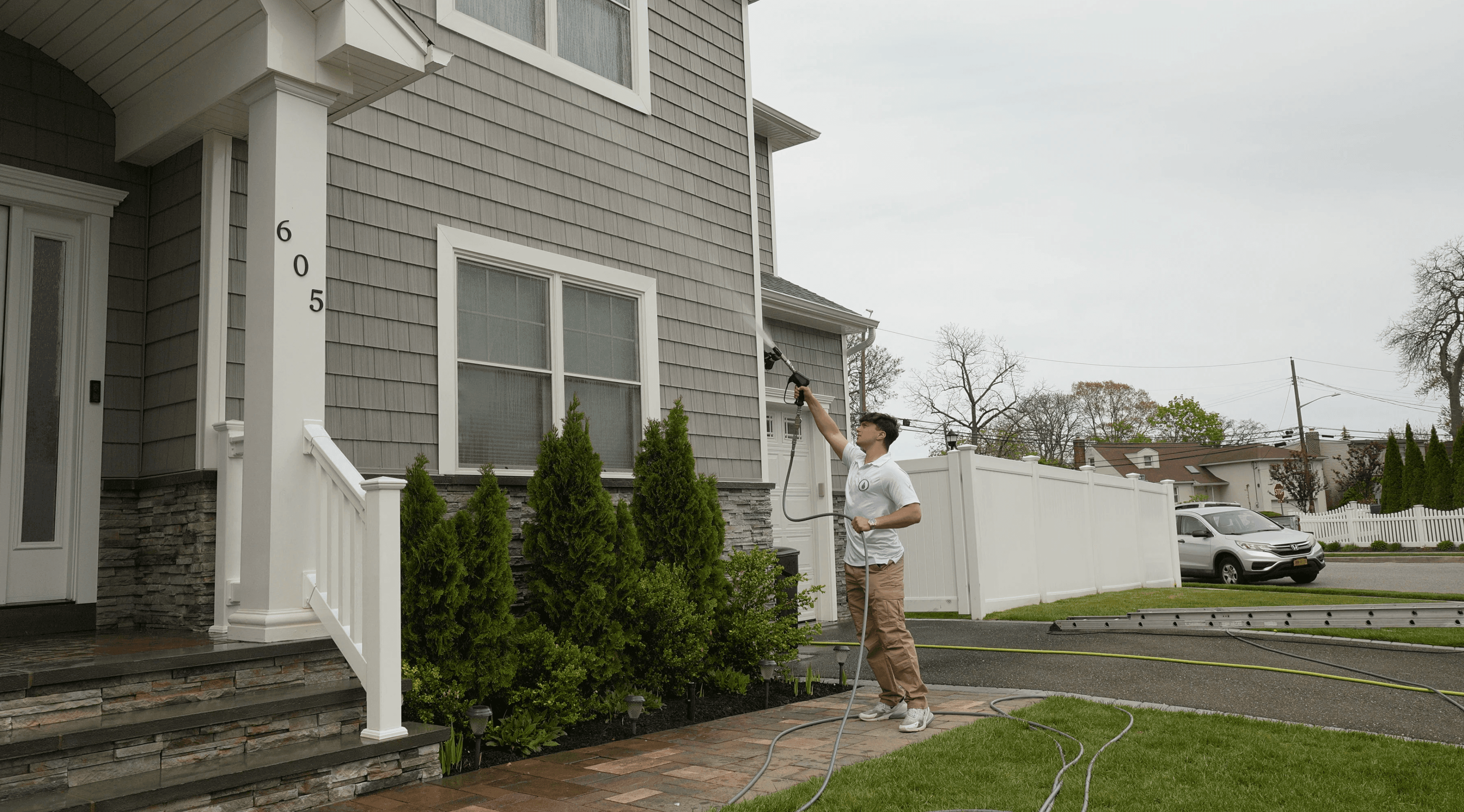
What is the difference between pressure washing and soft washing?
Pressure washing knocks dirt off with force. That works when the surface is harder than the stain: concrete, some stone, and brick that is in sound shape. The dirt is sitting on top, and water at the right pressure lifts it.
Soft washing is for surfaces that would be damaged by that force, or for growth that is rooted in the surface rather than sitting on it. Algae, mildew, and the black streaks on shaded siding are alive. A jet can rip the top layer off and leave the roots, so the green comes back. A soft wash applies a solution, gives it time to work, and rinses at low pressure. The goal is to kill the growth and rinse it away without driving water behind the cladding.
This is general guidance about the two methods. It is not a claim that every company uses the same mix or the same pressure. Clearview's pressure washing service states that the crew matches pressure and soft-wash methods to each surface, reserves higher pressure for hardscapes, and uses a soft wash where the material calls for it. The published process is to assess the surface, apply a detergent to break down mold and grime, wash, and rinse. The site describes those detergents as eco-friendly. It does not publish a chemical list or a PSI chart, and a quote should not pretend those numbers are universal.
Which surfaces on a Long Island home should be soft washed?
Vinyl siding is the common one. A tight jet can crack a brittle panel, etch the shine, or push water up behind the laps into the wall. Painted wood, fiber-cement, and soft trim have the same problem in a different costume. If the surface is a skin over a house, treat it gently.
Shaded elevations need this conversation the most. North walls and areas under trees stay damp, and that is where algae takes hold on Long Island. A bright south wall may only be dusty. The shaded wall is a biology problem. Soft washing is the method that addresses the growth instead of blasting the siding until it looks clean for a month.
A few surfaces should stay away from a pressure washer entirely. Roof shingles can lose granules under a jet. Solar panels are glass with wiring under them, and they are cleaned a different way — soft brushes and purified water, which is covered in how often to clean solar panels. Window glass is also the wrong tool for a house-wash wand. Mineral spots and salt film need a squeegee, not a rotary nozzle. If the glass is the thing that bothers you, start with window cleaning frequency instead of a pressure wash.
Where does straight pressure washing belong?
Concrete and pavers are where the pressure earns its name. Driveways, walkways, and patios hold oil, rust, and the gray film that builds up along the South Shore and anywhere cars track in sand. Those surfaces can take a higher pressure when the wand is kept moving and the tip is matched to the material.
Even on concrete, more pressure is not automatically better. A zero-degree tip can etch a line into a driveway that you will see every time you pull in. The skill is choosing a fan wide enough to clean without writing stripes into the slab. Decorative concrete and older pavers with loose joints need a lighter hand so the sand stays in the joints.
Decks and fences depend on the wood. A weathered softwood deck can be shredded by the same setting that cleans the concrete next to it. Clearview lists decks and fences among the surfaces the crew washes, and lists soft-wash as available. If the wood is already fuzzy or the stain is failing, say so when you book. The method should change. The goal is a clean board, not a raised grain that looks furry after it dries.
How often does an exterior need a wash?
Most houses benefit from a wash about once a year. That is general guidance, and it matches the way Clearview describes the service. Shaded or north-facing walls that grow mold may need it more often. A house in full sun, away from trees, can look fine for longer.
Good moments to book one on Long Island:
- Late spring, after pollen has stuck to damp siding and before you spend the summer looking at it.
- Early fall, once the humid months have fed the algae on the shaded side and before holiday guests.
- Before you paint or stain. Washing first tells you whether you are coating a clean wall or sealing dirt in place.
- When overflow from clogged gutters has striped the siding. Clean the gutters first, or the next rain redraws the stripe. Timing for that is in when to clean gutters.
A wash will not fix peeling paint, rotted trim, or a failed gutter. It will show you those problems more clearly, which is useful, and it will take the organic growth and traffic film off the surfaces that are still sound.
What should you ask before someone starts?
The useful questions are about method, not about who owns the biggest machine.
- Which surfaces will be soft washed, and which will see higher pressure?
- How will plants, outdoor outlets, and any open windows be protected?
- Will the solution be rinsed so it is not left to dry on the glass and the trim?
- Is the crew insured? Clearview states that its crews are fully insured.
Walk the house with whoever is quoting it. Point at the green on the north wall, the rust at the bottom of a downspout, and the oil in the driveway. Those are three different jobs wearing one name. Pressure washing on Long Island should come back as a plan for each surface, plus a price for your property. There is no flat rate published for this service.
When you are ready, request a quote or call (516) 212-0760. Say whether you are trying to rescue a driveway, a shaded wall, or both. That single detail changes the method.
Questions homeowners ask
Will pressure washing damage my siding?
It can, if the pressure is wrong for the material. Vinyl, painted wood, and similar cladding should be soft washed. Clearview states that the crew matches the method to the surface and uses higher pressure on hardscapes.
What surfaces can be pressure washed?
The service lists siding, driveways, walkways, patios, decks, and fences. Concrete usually takes higher pressure. Decks, fences, and siding often need a softer approach. Roof shingles and solar panels are not pressure-washing jobs.
How often should a Long Island house be washed?
Once a year is enough for many homes. Shaded or north-facing walls that grow algae may need it more often. That is general guidance based on exposure, not a schedule every property has to follow.
Keep reading
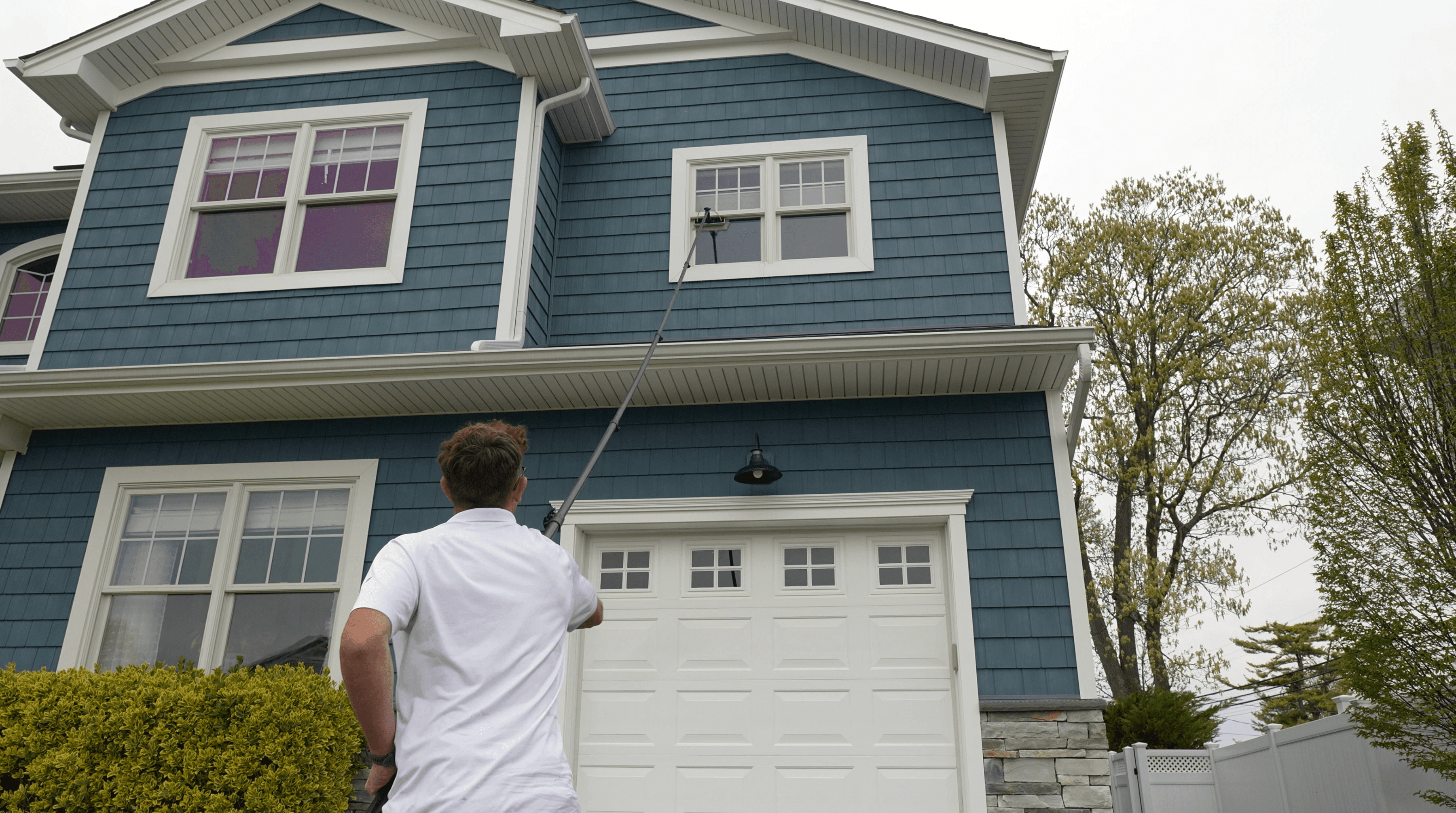
How Often Should You Clean Windows on Long Island?
How salt air, pollen, and sprinklers change the schedule, and what a thorough window visit should include.
Read more →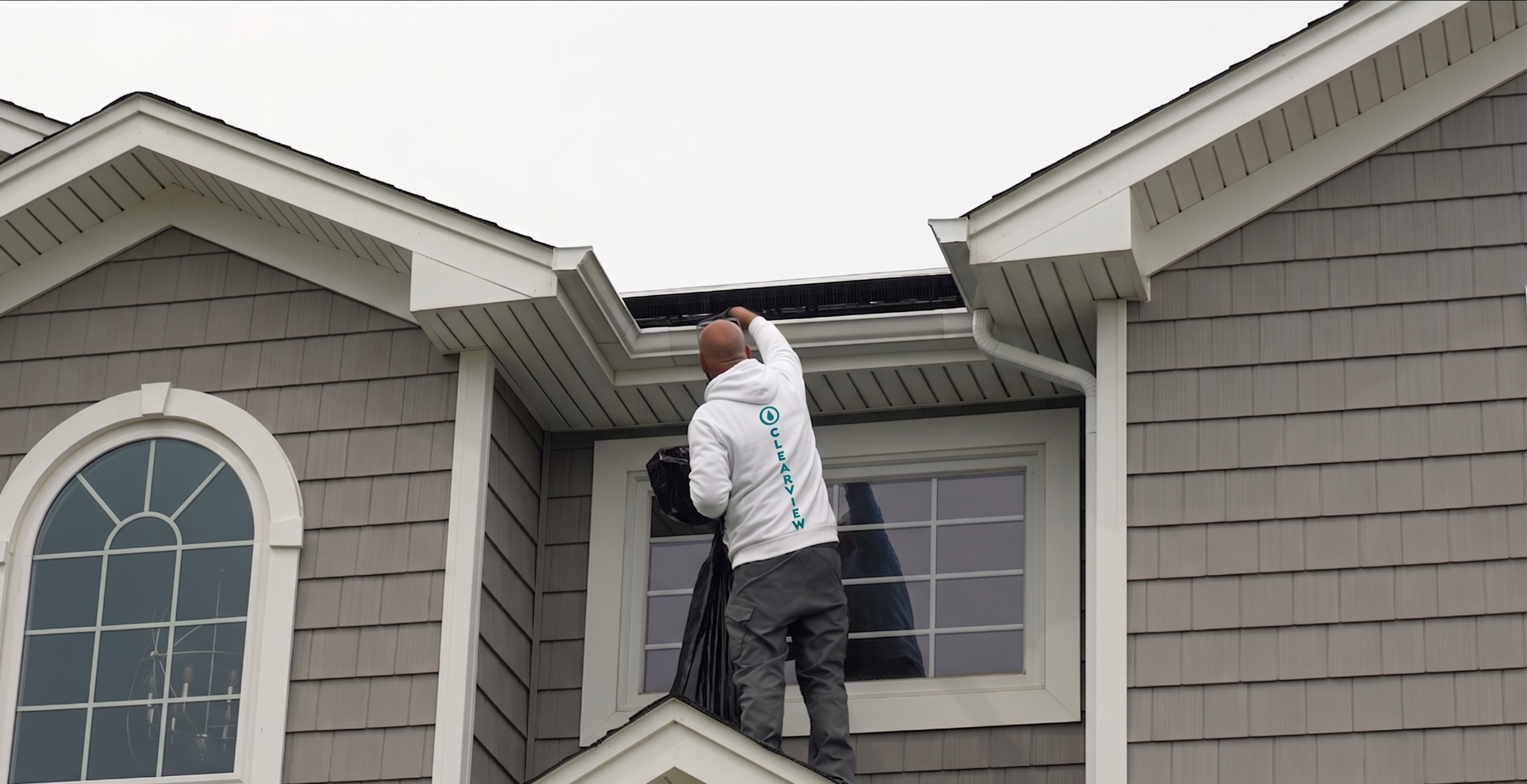
When Should You Clean Gutters on Long Island?
Why spring and late fall cover most houses, and when trees or a coming storm should move the date up.
Read more →Clearview Window Cleaning
Get a free quote
Call (516) 212-0760 or tell us about the property. We schedule pressure washing for homes and businesses across Nassau and Suffolk County.