
Clearview Blog How Often Should Solar Panels on Long Island Be Cleaned?
How Often Should Solar Panels on Long Island Be Cleaned?
Short answer. Once or twice a year is enough for many solar arrays on Long Island. Plan one cleaning after the heavy spring pollen, and a second in early fall if the panels sit under trees, near the shore, or where birds land. Rain helps with loose dust. It does not remove pollen paste, salt film, or droppings. There is no single production number that fits every roof, so ignore any ad that promises a fixed percentage from a wash.
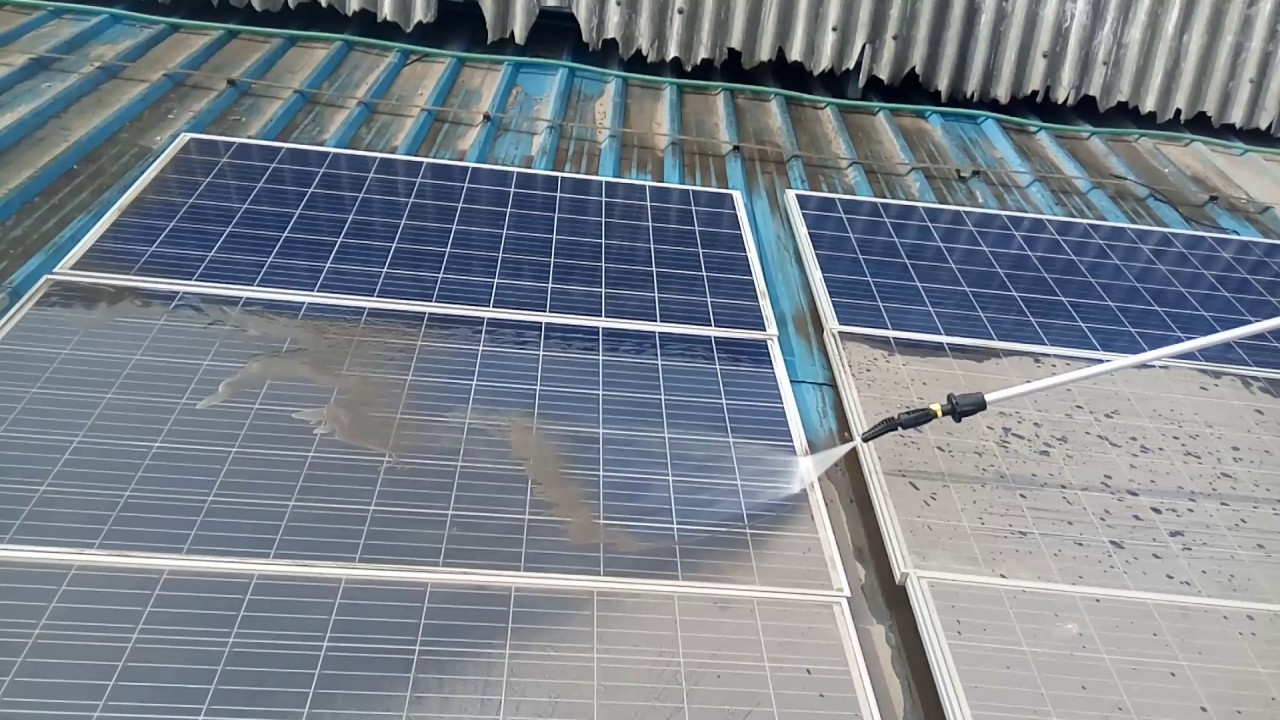
How often should solar panels on Long Island be cleaned?
Clearview's guidance for solar panel cleaning is the same range most systems can live with: once or twice a year, and more often in dusty spots or after a heavy pollen or storm season. That is general guidance. A steep array that gets a driving rain may stay clearer than a low-slope array under a maple.
Look at the glass, not the calendar, if you are unsure. A uniform gray film is dust and pollen. White speckles that do not rinse in the rain are often salt, especially near the bay or the ocean. Dark splatters are birds. Any of those can shade the cells underneath. You do not need a monitoring app to justify a clean, but if production in a clear week looks softer than the same week last year, the glass is one of the first things to check before assuming a panel has failed.
Pollen season is the easy one to time. The same yellow coat that sticks to windows sticks to the array. If you are booking glass in late spring, it is a natural week to have the panels done too. They are different tools and different access, and they can still share a visit when the schedule allows.
Why doesn't rain take care of it?
Rain is good at moving loose, dry dust. It is poor at stuck-on film. Pollen lands on a damp night, dries in the morning sun, and becomes a paste. The next shower wets it and spreads it. Salt does something similar: a mist settles, the water evaporates, and the minerals stay. Bird droppings bake on. A storm may punch a clean streak through the middle of a panel and leave the edges filmed, which is why a rained-on array can look mottled rather than clean.
Droppings are worth taking seriously for a practical reason. A small shaded patch on a panel affects more than the cells it covers, because those cells share a circuit with their neighbors. You do not need a lab report to act on a visible splat. It is also the thing most likely to etch if it sits through a hot month. Soaking it off with the right method beats scraping it with a pad.
What rain will not do is rinse away a film left by the wrong cleaner. Household soap, vinegar in a strong mix, or a car-wash detergent can leave a residue that attracts the next round of dust. If a panel looks streaky a week after a DIY wipe, the product is a likely reason.
What is a safe way to clean a rooftop array?
The safe method is boring, and that is the point. Clearview states that panels are cleaned with soft brushes and purified water, with no abrasive tools and no harsh chemicals, and that this is the manufacturer-recommended approach that does not void a panel warranty. Purified water is used so minerals are not left behind as new spots. The brush is soft so the coating on the glass stays intact.
A pressure washer is the wrong tool. High pressure can drive water past gaskets and into connectors, and it can damage the frame seal. The same caution applies to abrasive powders, razor blades, and stiff deck brushes. If a spot does not come up with a soft brush and the right water, it needs a second pass or a note to you. It does not need a scraper.
Roof access is the other half of the job. A wet array is slippery. Walking on the glass, or leaning a ladder against the frame, is how panels and people get hurt. Clearview lists safe roof access and trained technicians as part of the service. If you are tempted to do the front edge from the ground with a pole, stay off the roof, keep the brush soft, and skip anything you cannot reach without climbing. The middle of a two-story array is a crew job.
This is also why a house wash and a panel wash are not the same appointment in method, even if they happen on the same day. Pressure washing versus soft washing explains where a wand belongs. It does not belong on the array.
When is the best time of year to schedule it?
Late spring, after the main pollen drop, is the first good window. Early fall is the second, before leaves mat down on a low-slope array and before shorter days make every bit of production matter more to you. After a storm that leaves salt or debris, do not feel locked to those two seasons. A dirty array in July is still a dirty array.
Time of day is general guidance too. Glass that has sat in full afternoon sun is hot, so a cautious habit is to wash when the array is warm rather than scorching, often in the morning, on a roof that is dry enough to work safely. Winter cleans are uncommon unless something specific landed on the glass. Ice and a wet roof are a poor combination for access.
Can panels be cleaned on the same visit as the windows?
Often, yes, if the schedule and the access line up. They are listed as separate services because the tools are different: squeegees and detail work at the windows, soft brushes and purified water on the roof. Mention both when you request a quote so the visit is planned for roof access, not only for glass on the walls.
Say how many arrays you have, whether they are on a steep roof or a low one, and whether you have noticed droppings or a pollen film. Residential and commercial systems are both part of the service across Nassau and Suffolk County. There is no flat rate published. The price follows the array.
If you want it on the calendar, call (516) 212-0760 or use the quote form. A clean will not repair a failed inverter or a cracked panel. It will take the film off the glass so the system you already paid for can see the sun.
Questions homeowners ask
How often should solar panels be cleaned?
Once or twice a year suits many Long Island systems. Plan an extra visit after heavy pollen, salt spray, or bird activity if the glass films up between those cleans.
Will cleaning void my solar panel warranty?
Clearview states that its method uses purified water and soft brushes, with no abrasive tools or harsh chemicals, and that this manufacturer-recommended approach does not void a panel warranty.
Can I pressure wash solar panels?
No. A pressure washer can force water into seals and connectors. Panels should be cleaned with a soft brush and purified water, which is a different service from washing siding or concrete.
Keep reading
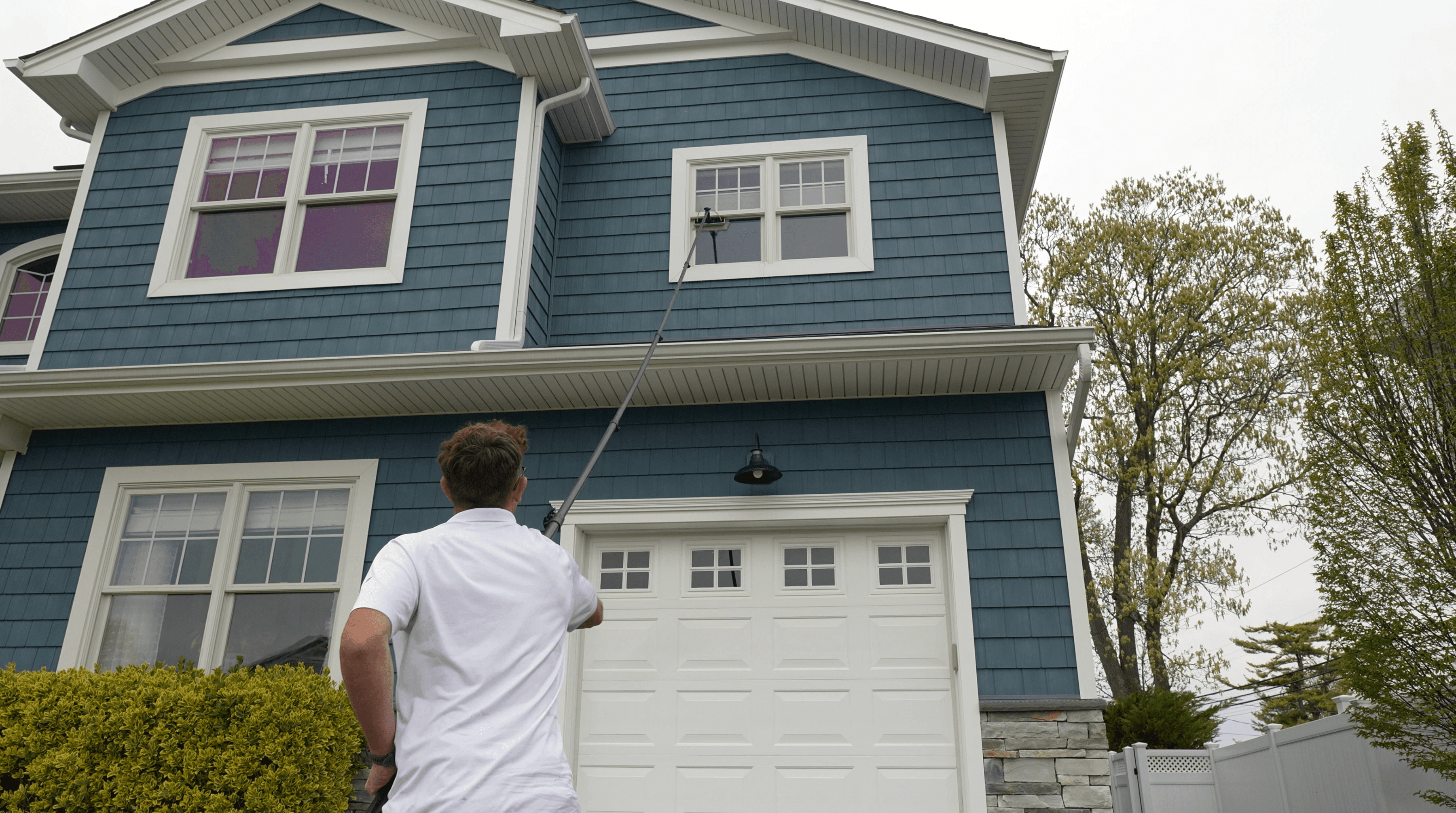
How Often Should You Clean Windows on Long Island?
How salt air, pollen, and sprinklers change the schedule, and what a thorough window visit should include.
Read more →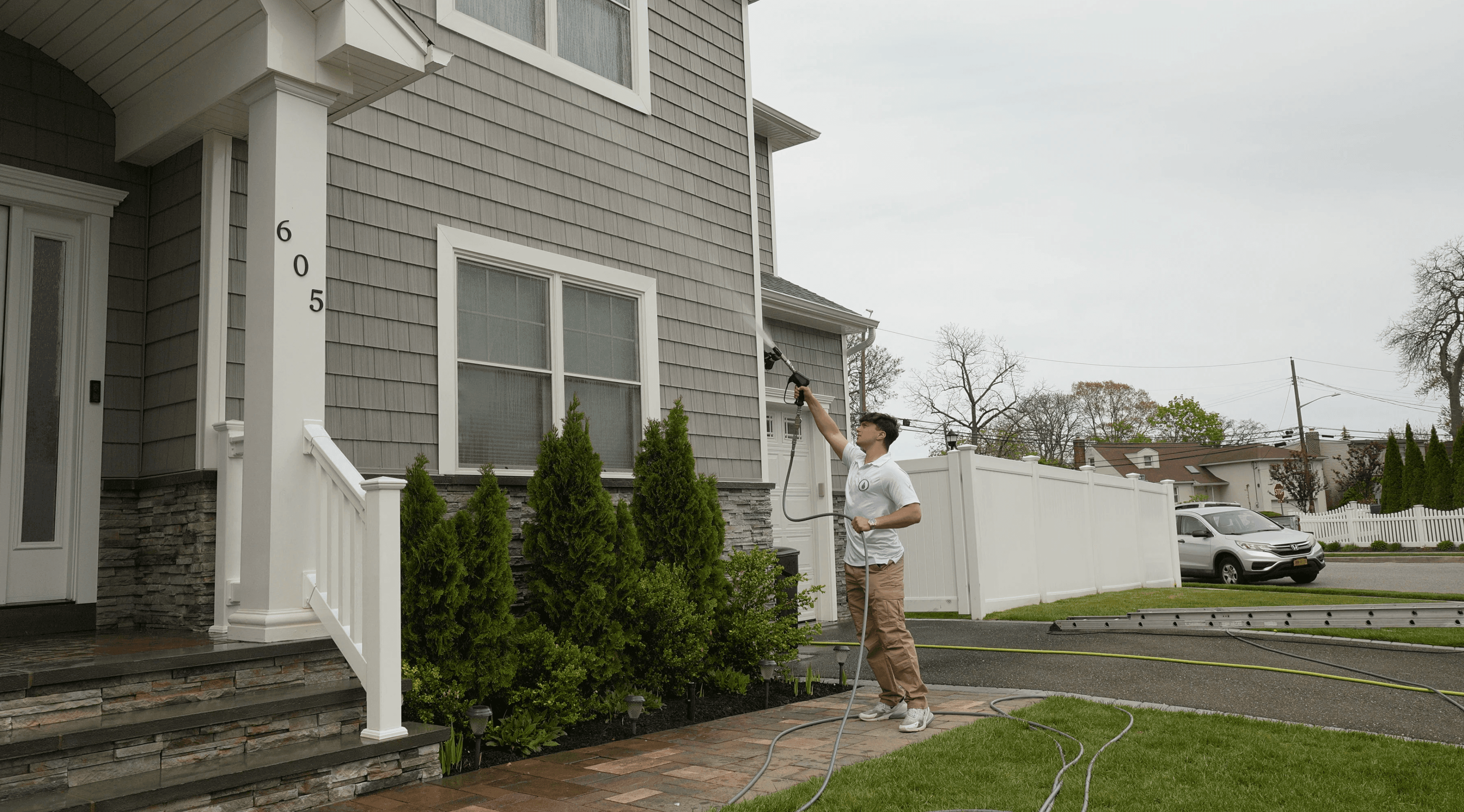
Pressure Washing vs Soft Washing for Long Island Homes
Which surfaces want a soft wash, which can take higher pressure, and what to ask before a crew starts on the house.
Read more →Clearview Window Cleaning
Get a free quote
Call (516) 212-0760 or tell us about the property. We schedule solar panel cleaning for homes and businesses across Nassau and Suffolk County.